Rare Medical News
Advertisement
Spotlight On
Rasmussen Encephalitis
Rasmussen encephalitis is a chronic inflammatory neurological disease that usually affects only one hemisphere of the brain. It most often occurs in children under the age of 10, although adolescents and adults may also be affected
Prevalence
unknown
N/A
US Estimated
N/A
Europe Estimated
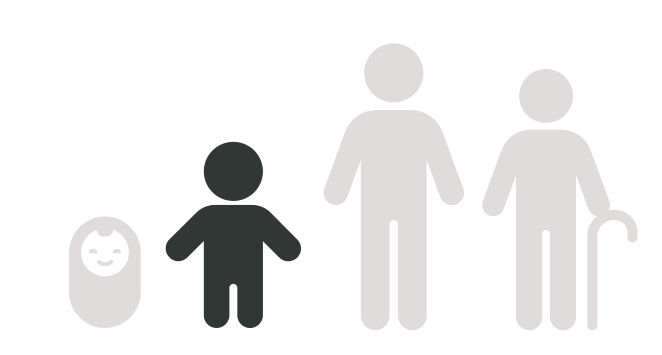
Age of Onset
childhood
ICD-10
G04.81
Inheritance Pattern
Believed to be an autoimmune disorder targeting one hemisphere of the brain
5 Facts you should know
FACT
Rasmussen encephalitis pathogenesis is thought to involve cytotoxic T-cell–mediated neuronal injury, although viral and autoimmune mechanisms have also been proposed
FACT
The disease typically presents in childhood with focal seizures, often epilepsia partialis continua (EPC), that are resistant to antiseizure medications and worsen over time
FACT
Progressive neurological deterioration includes hemiparesis, cognitive impairment, and language deficits, reflecting the unilateral cortical inflammation and atrophy
FACT
MRI findings often reveal progressive hemispheric atrophy with cortical T2 hyperintensities, which, along with EEG and clinical features, support the diagnosis
FACT
Treatment is challenging: immunotherapy (e.g., corticosteroids, IVIG, plasma exchange, rituximab, or tacrolimus) may slow progression, but the only definitive intervention is hemispherectomy, which can effectively control seizures at the cost of permanent hemiplegia
Interest over time
Google searches
Common signs & symptoms
Intractable seizures
often focal seizures affecting one side of the body
Progressive hemiparesis
Cognitive decline
and language impairment (depending on hemisphere affected)
Hemianopia
Progressive neuroinflammation
seen on imaging and biopsy
Current treatments
Immunotherapies
corticosteroids, IVIG, plasma exchange, and immunosuppressive drugs (e.g., tacrolimus, rituximab)
Antiepileptic drugs (AEDs)
often partially effective for seizures
Surgical treatment
Functional hemispherectomy or hemispherotomy remains the most effective intervention for seizure control in severe, refractory cases
Rehabilitation support
for motor, speech, and cognitive functions