Rare Medical News
Advertisement
Spotlight On
Niemann-Pick disease type A
Niemann-Pick disease is an inherited condition characterized by abnormal lipid metabolism, which causes harmful amounts of lipids to accumulate in the spleen, liver, lungs, bone marrow, and brain
Prevalence
<1 >
331
US Estimated
514
Europe Estimated
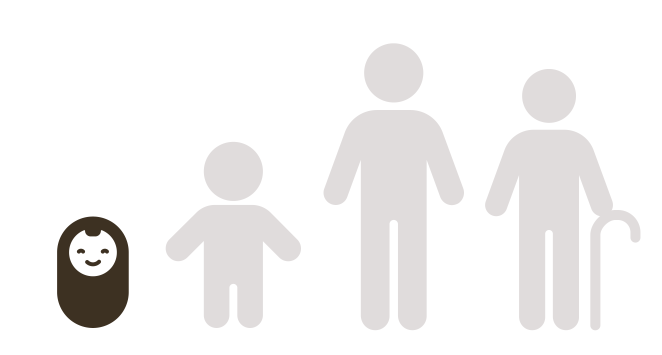
Age of Onset
ICD-10
E75.2
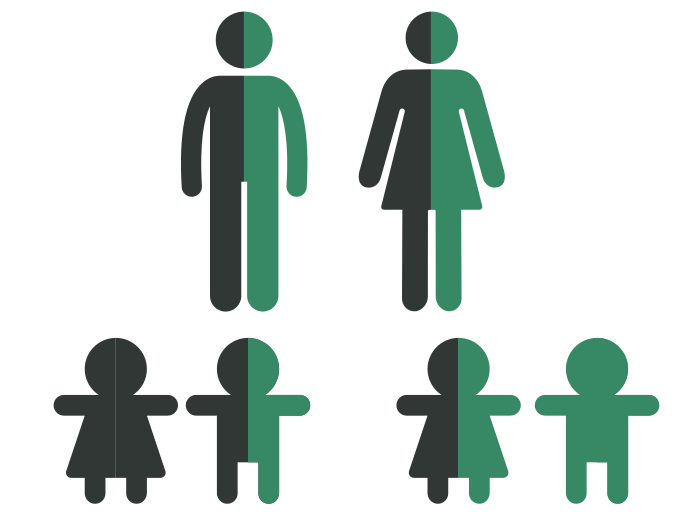
Inheritance
Autosomal dominant

Autosomal recessive
Mitochondrial/Multigenic
X-linked dominant
X-linked recessive
5 Facts you should know
FACT
Type A is the most severe form
FACT
It begins in early infancy and occurs most often in Jewish families
FACT
Additional symptoms include weakness, an enlarged liver and spleen, swollen lymph nodes, and profound brain damage by six months of age
FACT
Children with this type rarely live beyond 18 months
FACT
Mutations in the SMPD1 gene cause Niemann–Pick disease type A
Interest over time
Google searches
Common signs & symptoms
Cherry red spot of the macula
Athetosis
Autosomal recessive inheritance
Bone-marrow foam cells
Constipation
Diffuse reticular or finely nodular infiltrations
Failure to thrive
Feeding difficulties in infancy
Current treatments
There is no specific treatment for this disease. Supportive care from the following specialists may be helpful for managing the symptoms: