Rare Medical News
Advertisement
Spotlight On
Hypophosphatasia
Hypophosphatasia (HPP) is a genetic condition that causes abnormal development of the bones and teeth. The severity of HPP can vary widely, from fetal death to fractures that don't begin until adulthood.
Prevalence
<1 / 40 000
N/A
US Estimated
N/A
Europe Estimated
Age of Onset
All ages
ICD-10
E83.3
Inheritance Pattern
Autosomal dominant
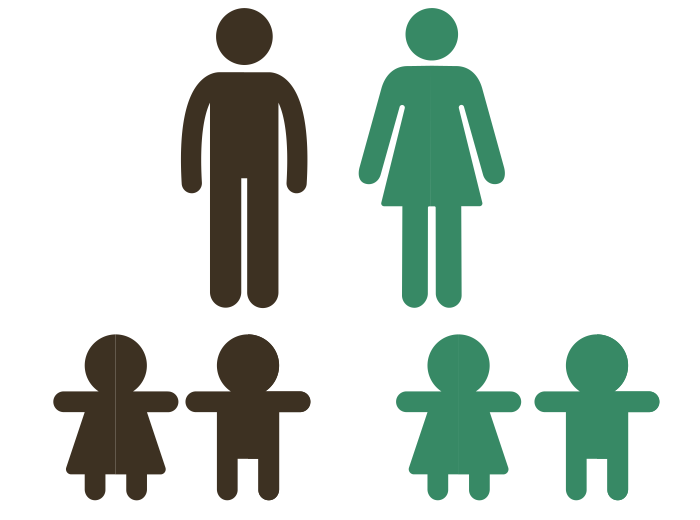
Autosomal recessive
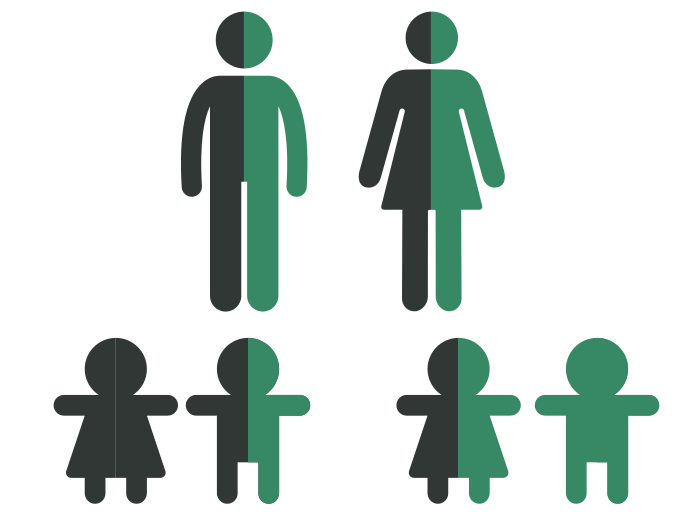
Mitochondrial/Multigenic

X-linked dominant
X-linked recessive
Interest over time
Google searches
5 Facts you should know
FACT
Hypophosphatasia is a rare inherited disorder characterized by low levels of tissue-nonspecific alkaline phosphatase (TNSALP), leading to impaired bone mineralization and phosphate metabolism
FACT
This condition presents in various forms, ranging from severe forms in infancy causing skeletal abnormalities, respiratory problems, and high mortality, to milder forms appearing in childhood, adolescence, or adulthood, causing bone fragility, fractures, and dental issues
FACT
Hypophosphatasia is caused by mutations in the ALPL gene, leading to decreased enzyme activity of TNSALP, which plays a crucial role in bone mineralization
FACT
Diagnosis involves clinical evaluation, blood tests to measure alkaline phosphatase levels, genetic testing to identify ALPL gene mutations, and imaging studies to assess bone abnormalities
FACT
Management includes supportive care, physical therapy, orthopedic interventions for fractures or deformities, and recently approved enzyme replacement therapy (asfotase alfa) for severe forms
Common signs & symptoms
Skeletal abnormalities
short limbs, bowing, poor bone mineralization
Frequent fractures & bone pain
Premature loss of teeth
especially primary teeth with roots intact
Respiratory problems
Muscle weakness
Hypercalcemia
Current treatments
Enzyme replacement therapy (ERT):
- Asfotase alfa (Strensiq®) → first and only approved treatment, improves survival, bone mineralization, and mobility in children and some adults
Supportive care:
Orthopedic interventions for fractures and deformities
Pain management
Dental care for premature tooth loss
Physical therapy
Nutritional monitoring
to manage calcium and phosphate levels