Rare Medical News
Advertisement
Spotlight On
Guillain-Barré syndrome
Guillain-Barré syndrome is a rare neurological disorder where the body's immune system attacks the nerves, leading to muscle weakness, tingling, and potential paralysis
Prevalence
1-9/100,000
3,310 - 29,790
US Estimated
5,135 - 46,215
Europe Estimated
Age of Onset
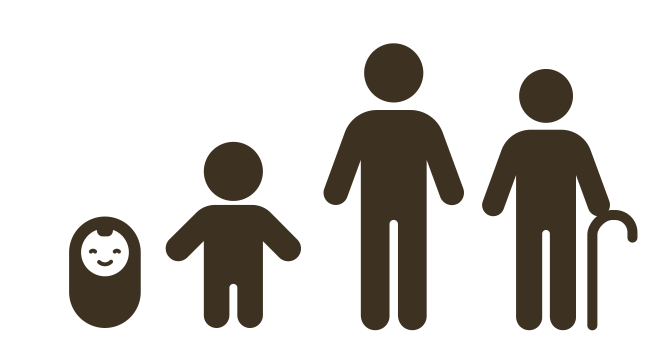
ICD-10
G61.0
Inheritance
Autosomal dominant

Autosomal recessive
Mitochondrial/Multigenic
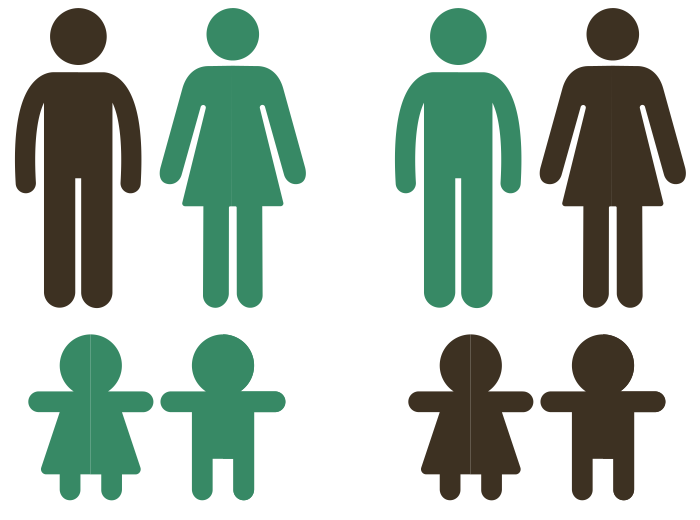
X-linked dominant
X-linked recessive
5 Facts you should know
FACT
Guillain-Barré syndrome (GBS) is a rare but serious autoimmune disorder where the immune system attacks the peripheral nerves, leading to muscle weakness, numbness, and in severe cases, paralysis
FACT
It often follows an infection, commonly respiratory or gastrointestinal, and can result in rapid-onset muscle weakness starting in the legs and spreading to the arms and upper body, with potential involvement of respiratory muscles
FACT
GBS is characterized by ascending muscle weakness, tingling sensations, and can progress to paralysis within weeks, with some individuals experiencing life-threatening complications such as respiratory failure
FACT
Diagnosis involves clinical assessment, electromyography (EMG), nerve conduction studies, and cerebrospinal fluid analysis, which may show elevated proteins but typically no significant increase in white blood cells
FACT
Treatment primarily involves supportive care, including hospitalization, respiratory support if needed, and intravenous immunoglobulin (IVIG) or plasmapheresis to reduce immune system activity and speed up recovery
Interest over time
Google searches
Common signs and symptoms
Muscle weakness
Muscle pain
Numbness
Tingling sensations
Current treatments
Unfortunately, there is no cure for Guillain-Barré syndrome (GBS). However, symptoms of the syndrome can be improved with treatments including: