Rare Medical News
Advertisement
Spotlight On
Chediak-Higashi syndrome
Chediak‑Higashi syndrome (CHS) is a rare autosomal recessive lysosomal trafficking disorder caused by LYST mutations that produces giant intracytoplasmic granules, oculocutaneous hypopigmentation, recurrent pyogenic infections, bleeding diathesis, and a life‑threatening accelerated hemophagocytic lymphohistiocytosis‑like phase
Prevalence
Extremely rare
N/A
US Estimated
N/A
Europe Estimated
Age of Onset
Infancy or early childhood

ICD-10
D70.3
E70.318
Inheritance Pattern
Autosomal dominant

Autosomal recessive
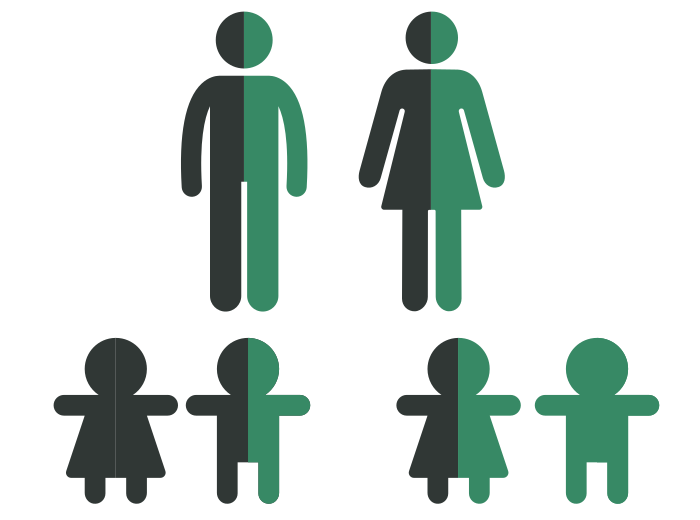
Mitochondrial/Multigenic
X-linked dominant
X-linked recessive
Rare View
Chediak-Higashi Syndrome is a rare genetic disorder caused by mutations in the LYST gene, which affects lysosomal trafficking within cells.

5 Facts you should know
FACT
People with Chediak-Higashi syndrome (CHS) have light skin and silvery hair (albinism) and frequently complain of solar sensitivity and photophobia
FACT
Frequent infections are common - the infections involve mucous membranes, skin, and the respiratory tract
FACT
Infections in CHS patients tend to be very serious and even life-threatening
FACT
Neuropathy often begins in the teenage years and becomes the most prominent problem
FACT
Few patients with this condition live to adulthood
Interest over time
Google searches
Common signs & symptoms
Recurrent, severe pyogenic infections, particularly involving Staphylococcus aureus
Neutropenia and impaired neutrophil function
Partial oculocutaneous albinism
Hypopigmentation of skin, hair, and eyes with silvery-gray hair
Bleeding diathesis due to platelet storage pool deficiency
Peripheral neuropathy, ataxia, and progressive neurologic impairment (often later onset)
Accelerated phase (life-threatening) resembling hemophagocytic lymphohistiocytosis (HLH), characterized by
- Fever
- Hepatosplenomegaly
- Pancytopenia
- Liver dysfunction
Current treatments
Definitive treatment
Allogeneic hematopoietic stem cell transplantation (HSCT)
- Only curative treatment for immunologic and hematologic manifestations
- Most effective when performed early, prior to the accelerated phase
- Does not reliably reverse established neurologic impairment
Management of infections
- Aggressive treatment with antibacterial and antifungal agents
- Prophylactic antimicrobials as indicated
- Treatment of accelerated (HLH-like) phase
- Immunochemotherapy according to HLH protocols
- Corticosteroids, etoposide, and supportive care
Supportive care
- Platelet transfusions for bleeding complications
- Management of neurologic symptoms
- Long-term monitoring for progressive neurologic decline