Rare Medical News
Advertisement
Spotlight On
Alternating Hemiplegia Of Childhood (AHC)
Alternating hemiplegia of childhood is a neurological condition characterized by recurrent episodes of temporary paralysis, often affecting one side of the body (hemiplegia)
Prevalence
1-2/100,000
3,310-6,620
US Estimated
5,135-10,270
Europe Estimated
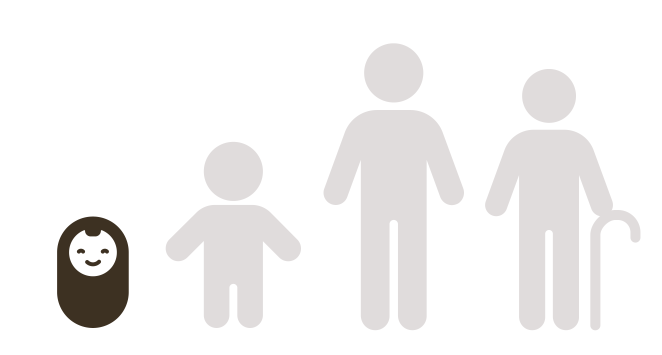
Age of Onset
ICD-10
G98
Inheritance
Autosomal dominant
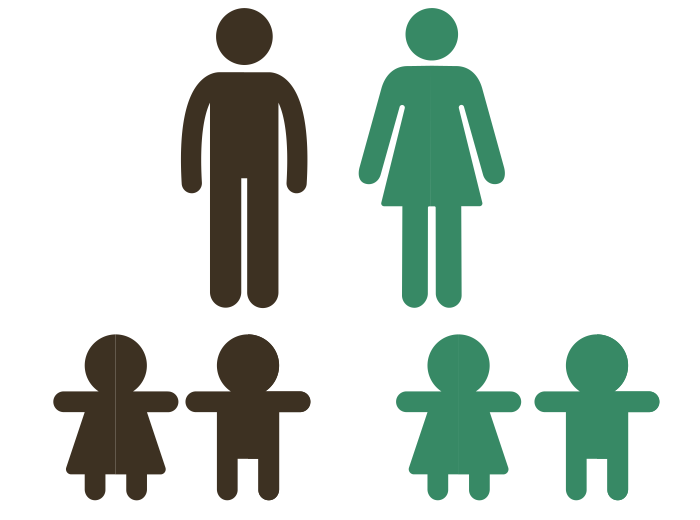
Autosomal recessive

Mitochondrial/Multigenic
X-linked dominant
X-linked recessive
Rare View
A rare neurological disorder characterized by recurrent episodes of hemiplegia, affecting one side of the body, alternating with the other, beginning in early childhood. It is often associated with developmental delays and other neurological symptoms.

5 Facts you should know
FACT
The most prominent symptom is repeated episodes of weakness or paralysis affecting one side of the body at a time in an alternating fashion
FACT
The first symptoms usually begin before the age of 18 months
FACT
The severity of AHC and the specific types of episodes that occur can vary dramatically from one individual to another
FACT
The length of attacks may also vary from minutes to weeks
FACT
All of the known symptoms dissipate immediately upon sleeping
Interest over time
Google searches
Common signs & symptoms
Bilateral tonic-clonic seizure
Grand mal seizures
Autosomal dominant inheritance
Choreoathetosis
Dystonia
Episodic hemiplegia
Episodic quadriplegia
Intellectual disability
Nystagmus
Top Clinical Trials
At the time this analysis was conducted, there were no treatments in development for this disease.
Top Treatments in Research
At the time this analysis was conducted, there were no treatments in development for this disease.