Rare Medical News
Advertisement
Spotlight On
Alopecia universalis
Alopecia universalis, also known as alopecia areata universalis, is a medical condition involving the loss of all body hair, including eyebrows, eyelashes, chest hair, armpit hair, and pubic hair
Prevalence
1-5 / 1,000,000
33,100-165,500
US Estimated
51,350-256,750
Europe Estimated
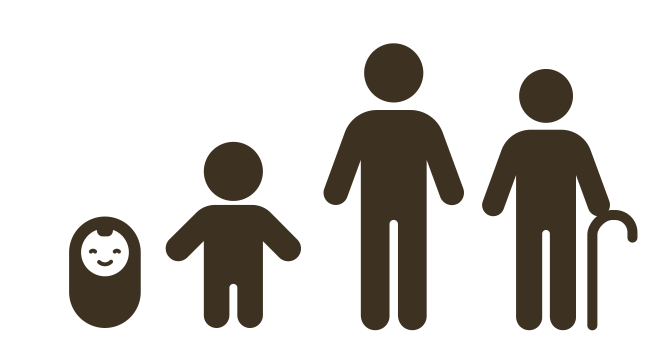
Age of Onset
ICD-10
L63.1
Inheritance
This condition does not appear to have a clear pattern of inheritance.
Rare View
The most severe form of alopecia areata, resulting in the complete loss of hair on the scalp and body. It is an autoimmune condition with no definitive cure, and treatment is challenging, often involving immunosuppressive therapies.

5 Facts you should know
FACT
It is the most severe form of alopecia areata
FACT
A large proportion of patients will obtain at least transient recovery periods of partial or total hair regrowth
FACT
It is characterized by the involvement of multiple inflammatory cytokines such as tumor necrosis factor-alpha and multiple interferons
FACT
AU has been observed to cause a significant impact on patients’ confidence, self-esteem, and socialization
FACT
People with AU are usually healthy - and have no other symptoms and a normal life expectancy
Interest over time
Google searches
Common signs & symptoms
Absent eyebrow
Absent eyelashes
Patchy alopecia
Alopecia totalis
Autoimmunity
Multifactorial inheritance
Nail pits
Trachyonychia
Current treatments
No therapy has been found to work for everyone who has alopecia universalis (AU) which makes managing AU challenging. Although multiple treatments have been explored, no therapy is currently approved by the United States Food and Drug Administration (FDA). Some promising therapies include: